Es mostren els missatges amb l'etiqueta de comentaris esports. Mostrar tots els missatges

dilluns, 12 d’abril del 2010

Literatura futbolística

En un magnífic article aquest cap de setmana al New York Times, Rob Hughes lloa, un cop més, les característiques del joc del Futbol Club Barcelona. Si l'anglès no us és llengua estranya i sou dels que us agrada el futbol del Barça de Guardiola, us recomano la lectura de l'article, que us deixo aquí sota perquè en gaudiu.

--

Barcelona Makes Real Look Second Best
By ROB HUGHES
April 11, 2010

The hour is midnight, but Madrid is not about to sleep anytime soon. Its team, Real, has just been outplayed and outclassed by Barcelona in Madrid’s own cathedral to sport, the Bernabéu.

The 2-0 score line does not settle the Spanish league title, because each team has seven games yet to play. But, with goals from Lionel Messi and Pedro Rodríguez on Saturday, each of them created by the master passer, Xavi Hernández, this was indeed a defining night, another one in Barcelona’s omnipotent season.

The defeat ended Madrid’s run of 15 consecutive league victories. It ended Real’s perfect record of 12 Liga victories on its home turf. It ended the myth that, by spending €259 million, or about $398 million, Real Madrid could eclipse what Barcelona has created over decades of diligent schooling.

Pep Guardiola, player turned coach of this new Barça, summed it up in his prematch address to reporters in the Spanish capital. He said he had told his players they would have to treat this match as a cup final because “we are talking about playing against the second-best team in the world.”

We know enough about Guardiola by now not to read arrogance into that statement. That his Barcelona squad is the best on earth is a matter of record. It is the current Spanish, European and world champion.

But, possibly unwittingly, Guardiola had laid on the line to his players what was at stake in the Bernabéu.

The day before that team briefing, Guardiola had attended a ceremony in Barcelona at which Johan Cruyff, his mentor, was made honorary president of F.C. Barcelona. This ritual mirrored Real’s appointment some years back of its former captain, Alfredo di Stéfano, as life president.

So each of the great rivals has ceremonially acknowledged that playing ideals, and any grandeur they have, comes from players. Madrid’s happens to be an Argentine, now 83 years old, while Cruyff is Dutch and 62.

They are men of different generations. While di Stéfano’s leadership in the 1950s laid the foundations of Real’s European success, what Cruyff gave Barça as a player and as coach is still at the core of the club’s philosophy today.

“Johan came along and revolutionized everything,” Joan Laporta, the Barcelona president, said. “The modern day Barça started with him, he brought us a style of soccer we love, he is the creator of the way we express ourselves.”

Cruyff’s style, his belief that the coach, or creator of an ethos, must have influence from the first team to the 8-year-old recruits has caused some conflicts down the years. But we see its fruits now. We see its expression in a squad handled by Guardiola, who came through those junior ranks and who, winning all before him in his first two seasons as coach, started the match Saturday at the Bernabéu with seven players reared through the Barcelona academy and finished it with eight.

The coach cannot score the goals. He has men who can. Messi, inevitably, scored the first. Pedro, a boy from Tenerife but a youth of Barça’s teaching, scored the second.

Madrid was finished. The presence of Cristiano Ronaldo, Gonzalo Higuaín, Karim Benzema and all its other expensive purchases could do nothing to deny which is the better team.

Manuel Pellegrini, Madrid’s latest coach, admitted that, though his players must not give up until the end of the title chase, they were defeated by a better team.

The comparisons were painful for the 80,000 Madridistas whichever way they looked. Barcelona, while never at its flowing best, had too much movement, too many talents, too much teamwork for the home side.

Messi, without being at his best, again scored the goal that set his team’s confidence soaring. His exchange of passes with Xavi, his control of the ball on his chest and then his sudden change of direction on the ground, foxed Raúl Albiol, who expected Messi to shoot with his left foot whereas he scored with the right.

Similarly, Pedro, at 22, is the same age and a similar height and weight to Messi — yet a newcomer to the first team this season, scored with his left foot. Pedro’s dominant foot is his right.

This is a trait of those raised in Barcelona’s academy. A boy may favor one foot when he arrives, but he is very soon taught to practice until he masters all the skills with the other foot.

Messi’s tally is now 40 goals, and 10 assists, from 44 matches this season. Pedro’s contribution, 18 goals in all competitions, is so good that even without the injured Zlatan Ibrahimovic, the coach could leave Thierry Henry, Andres Iniesta and Bojan Krkic on the bench.

Yet Guardiola is in cooperation with players he helped bring through the Barcelona ranks. For the encounter Saturday, Guardiola experimented tactically. He moved Daniel Alves from right back to right wing, placing central defender Carles Puyol behind him. Several times, the players came to the touchline to converse with their coach. At halftime, team positions were switched around.

Alves reverted to right back, Puyol moved to the left and Maxwell advanced from left back to left wing.

All the while, the immovable source of what makes Barça tick, Xavi, wove his stealthy, cunning, unerringly accurate passes. He set up Messi with a chip that would have made any golfer at the Master’s proud. He released Pedro with almost a casual pass along the ground.

He was superior to Madrid’s Xabi Alonso in the creative role. Messi was more superstar than Ronaldo. Even goalie Victor Valdes proved, this night, more difficult to beat than Spain’s No.1, Iker Casillas.

The pain might not be over. Barcelona plans a return to the Bernabéu next month, when Madrid’s fine stadium hosts the Champions League final. Winning that, again, would just rub Catalan salt in Madrid’s wound.

dissabte, 19 de desembre del 2009

El New York Times lloa el model del Barça

Fins i tot abans del sisè títol i de les llàgrimes de l'entrenador, que culminen de manera simbòlica aquest 2009 blaugrana, el NYTimes es rendeix al joc i al model futbolístic del FC Barcelona, en aquesta anàlisi de Rob Hughes sobre els efectes de la crisi econòmica al món del futbol.


«Messi, the little man from Argentina, has eclipsed Ronaldo for the player of the year titles in 2009. His essence is that he is a team player, and his team, Barça, has garnered all the trophies available to one club in one season. Not only that, Barcelona has raised the game back to beauty.

With Messi down either wing, with Xavi picking out passes as if by the instinct of a homing pigeon, with Andrés Iniesta and Thierry Henry, and now with Zlatan Ibrahimovic replacing Samuel Eto’o as the focal point of attack, it has a style so easy on the eye, yet also so competitive.

Madrid has support from the Spanish institutions prepared to help it pay more than its means to try to ensure that Barcelona does not keep running away with all the prizes. Madrid’s policy was to buy — not just Ronaldo, but also Kaká, Karim Benzema, Xabi Alonso and others in a single summer.

What it cannot buy is the roots of Barça’s beauty, its renowned style. That is a product of La Masia, the school built on an 18th century farm in the lea of the club’s Camp Nou stadium.

“The player who has passed through La Masia has something different to the rest,” Coach Josep Guardiola said. “It’s a plus that comes from having competed in a Barcelona shirt from the time you were a child.”

Guardiola knows, because he passed through the school and played for the first team for a decade before graduating to be its coach. One of his players, the meticulous Xavi, has just played his 500th senior game in the shirt.

Xavi is a born and bred Catalan, a child and now a man of F.C. Barcelona. But though Messi was born abroad, Txiki Begiristain, the club’s technical director, insists, “Messi’s from Argentina, but he was formed in our house.” Indeed he was, from age 13.»

dimecres, 27 de maig del 2009

NY Times: “A Dazzling Barcelona Wins With Style”


«It will be left to Barcelona’s supporters to gleefully debate whether this is the Catalans’ greatest team, now that the first-year coach Pep Guardiola has guided his squad to the Spanish League title, the Spanish Cup and now the European Cup with a style that is familiarly elegant and ebullient.»

The New York Times

dimecres, 6 de maig del 2009

Ja m'ho permetreu...

Those were the reasons and that was New York
Leonard Cohen

En un pub de la Primera avinguda, prop de la feina, ens acabem trobant una colla de catalans i altres aficionats barcelonistes de nacionalitats diverses. Aquí a Nova York, són quarts de tres del migdia quan comença el partit i, doncs, aprofitem per dinar de tocatardans. Dissabte vam tenir-ne un preludi excels, ben regat amb un vi albariño a la Casa Galícia de Queens: el gol inicial del Madrid va ser celebrat per la majoria de taules de l'establiment (un vuitanta per cent llarg dels assistents), però a partir d'aquell moment vam degustar un pop à feira, vam girar la truita, i tot va ser per emmarcar.

Això d'avui també ho serà; hem patit com mai, i al final l'èpica s'ha pintat de blaugrana. Suposo que el fet de ser lluny de casa, en el futur farà que moments com aquests els recordi encara amb més intensitat. Moments viscuts amb amics que hem fet a Nova York i que ho seran per sempre més.


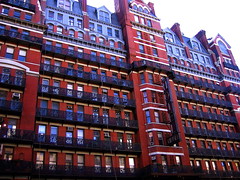
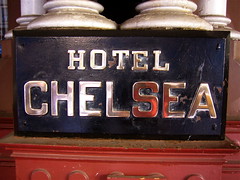
Hotel Chelsea (4)Hotel Chelsea (6)

dissabte, 29 de setembre del 2007

Tanca la porta que tinc Freud!

La porta!

Diuen que això del barcelonisme és digne de psicoanàlisi: tant les alegries com les crisis pugen i es desinflen com un suflé. Passem de l'eufòria irracional al pessimisme més absolut en poc menys de noranta minuts i aquí no ha passat res. I tant si plou com si neva, ens defineix l'"avui patirem".

Mireu si la cosa és digna de psicoanàlisi que, tot i ser lluny de casa, ens trobem per patir/gaudir del mal blaugrana en comunió. Aquí, a Nova York, hi ha diverses opcions per veure els partits del Barça en companyia; sempre pots deixar el programa P2P (peer to peer) connectat a la CCTV5 xinesa i, mentre es refreden les cerveses que has comprat al Gristedes o al Pathmark de torn, trucar als amics per convocar-los a casa. Així t'estalvies la factura mensual del cable i pots seguir la retransmissió en català del mestre Puyal, o dels seus deixebles avantatjats de RAC1, per internet. Ara bé, si el terme "amics" es refereix a més d'un, la pantalla de l'ordinador pot quedar petita.

Una altra opció és sortir al carrer, que et toqui l'aire, i tancar-te en qualsevol pub de barri d'aquests que tenen tres-cents plasmes sintonitzats a esports de dinàmica tan intel·ligible com el cricket, el bèisbol, el rugby o el futbol americà. A les grans ocasions —com a la Copa del Món—, tindran la deferència de sintonitzar una pantalla amb la clientela forana.

Si voleu carnassa —és a dir, en un Barça-Madrid— podeu provar sort a La Nacional, al cor del barri de Chelsea. Tot serà que la banderota espanyola de la porta, que rivalitza en mida amb la de la plaza Colón de Madrid, no us tiri enrere. A dins, hi trobareu un ambient hostil amb regust de tauromàquia i caliquenyo, de bar de poble ejpañó amb vells inclosos, que sembla que no s'hagin adonat que juguen al mus al cor del barri més gai i més ple de galeries d'art de NY, i jovenets madrilenys de fenotip MBA (Master of Business Administration): cabell engominat i efígie a cavall sargida al pit. El mateix, a la Casa Galícia de Queens; però almenys allà et fas passar la impressió inicial a base d'un bon polbo á feira.

L'opció menys cañí de les que es fan i es desfan és aquest sports bar de la tercera avinguda i el carrer dotze "where football is religion!" que duu el nom d'un western de Henry Hathaway, Nevada Smith, protagonitzat per Steve McQueen. El Nevada Smith's acull la Penya Barcelonista New York City Nevada Smiths i ofereix, des de 1999, els partits del Barça: com va prometre el propietari del bar si, a la final de la Copa d'Europa d'aquell any celebrada al Camp Nou, el Manchester United derrotava al Bayern Munich. I així fou.

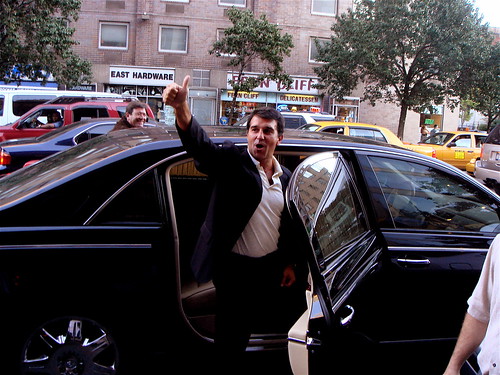
Aquesta tarda, a les quatre hora de NY, poc abans de l'inici del partit Llevant-Barça, érem al Nevada. Tot d'una, ha començat a sonar l'himne amb lletra de l'Espinàs (A peu pel... camp que és un clam) i ha entrat el President del FC Barcelona, que havia vingut a veure el matx amb els aficionats culers de Nova York. És tot un senyor, i un bon jan. I, ves per on, m'ha vingut al cap el títol d'una obra de teatre delirant del Toni Albà. Ja ho dic jo, digne de psicoanàlisi.